
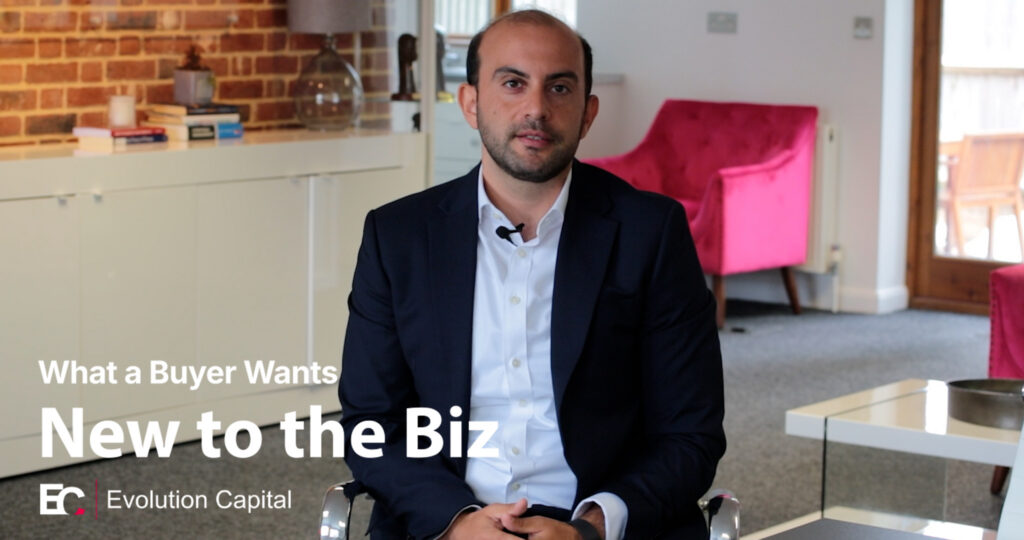
New To The Biz
Published by Evolution Capital | IT/Telco M&A Specialists | 25 Years | 250+ Transactions Evolution Capital · 25 Years · 250+ Deals New To The Biz. What every first-time IT services seller needs to know before they start a sale process. Published by Evolution Capital | IT/Telco M&A Specialists | 25 Years | 250+ Transactions 25+ Years in technology M&A 250+ Transactions $1bn+ In completed transactions You may know your business better than anyone alive. But knowing your business and knowing how to sell it are two entirely different skills. This article is for founders doing their first deal. Evolution Capital · From the trenches At a Glance What You’ll Learn. Selling an IT services business involves much more than finding a buyer. Founders should prepare for a process that typically lasts four to six months, maintain business performance during the sale, understand buyer expectations, protect confidentiality, and surround themselves with experienced advisers. Need Expert Advice Before You Start? The earlier you prepare, the smoother your sale process is likely to be. Table of Contents 01 What Every First-Time IT Services Seller Needs to Know 02 The Emotional Reality Nobody Warns You About 03 Running Your Business While Selling It 04 Who to Bring into the Loop, and When 05 Deal Speed and Timelines 06 Now, About the Other New Kid on the Block 07 How to Assess and Manage a First-Time Buyer 08 When First-Time Buyers Work Well 09 The Cautionary Tale 10 How Evolution Capital Can Help 11 Common Questions New To The Biz We meet them all the time. Founders who have spent fifteen, twenty, sometimes thirty years building something genuinely impressive. They know every customer by name. They can tell you exactly why their churn rate is what it is, which members of staff are underperforming, which supplier relationships need renegotiating. They understand their technology stack, their cost base, their competitive position, and their market better than any outsider ever will. And then they enter an M&A process for the first time, and they discover that none of that knowledge is quite enough. You can be the most experienced IT managed services operator in the country and be completely new to the business of M&A. The terminology is different. The process is different. The dynamics are different. The emotional experience is unlike anything most founders have encountered before. And the decisions made in those few months, many of them under significant time pressure and stress, can be worth millions of pounds in either direction. This article is not about whether your business is good enough to sell. It is about what first-time sellers need to understand before they start, and what they need to manage well to get to the outcome they deserve. What Every First-Time IT Services Seller Needs to Know The Emotional Reality The Emotional Reality Nobody Warns You About Most first-time sellers underestimate the emotional weight of a sale process. People warn about legal complexity, about diligence, about working capital adjustments. Almost nobody warns you about what it actually feels like to be in the middle of it. Selling a business you have built is not a straightforward commercial transaction. It is, for many founders, one of the most significant events of their professional life. The business has often consumed the better part of a decade or two. It carries relationships, identity, and meaning that go well beyond the financial value. Separating yourself from it, on the explicit understanding that someone else is about to take it over and do things differently, is genuinely difficult. And the process itself compounds this. A typical IT services transaction from initial engagement to completion runs four to six months. During that entire period, you are in a state of suspended animation: you cannot fully commit to the business as if you are staying, and you cannot fully let go because it isn’t sold yet. Every week brings new requests, new questions, new conversations with advisers. The emotional toll of managing uncertainty, for months at a time, is something most founders only understand in retrospect. Add to this the specific stress of not being in control. You are used to making decisions and having them happen. In an M&A process, you are responding to a buyer’s timetable, a lawyer’s drafting, a diligence team’s requests. The process moves at its own pace and there is limited ability to force it faster, which for founders who are accustomed to controlling outcomes is genuinely uncomfortable. None of this is a reason not to sell. It is a reason to go in with eyes open and properly supported. We say this from direct experience: a significant number of the conversations we have with clients during a live sale process end up being less about financial mechanics and more akin to therapy or counselling. The questions are not always about EBITDA normalisation or working capital pegs. They are about doubt, about identity, about whether this is the right decision, about what comes next, about feeling out of control for the first time in years. These conversations are a normal and important part of what a good corporate finance adviser does, and founders should not feel embarrassed to need them. Beyond your advisers, think about your personal support structure. A spouse or partner who understands broadly what you are going through, even if not the detail. A trusted peer who has been through a sale and can offer perspective. Close friends who know enough to check in on you. And if you think the emotional weight of the process may be significant, there is absolutely no shame in engaging a professional therapist or coach before or during the process. Some of the most successful and self-aware founders we have worked with have done exactly this. A sale process is a major life event, and treating it as one is entirely rational. Prepare your support network before the sale begins. Key Takeaways 01 Prepare Your Support Network Selling a business is easier when you have trusted people to guide and support you throughout the process. 02
What A Buyer Wants: Series Launch
Home Our Services Transaction Services Lead Advisory Debt Advisory Virtual CFO & CFO Assist About Us Our Team Office Location Success Stories Blog Contact Us Home Our Services Transaction Services Lead Advisory Debt Advisory Virtual CFO & CFO Assist About Us Our Team Office Location Success Stories Blog Contact Us Published by Evolution Capital | IT/Telco M&A Specialists | 25 Years | 250+ Transactions Evolution Capital IT / Telco M&A · 25 Years · 250+ Deals M&A Survival Guide · Series Introduction What A Buyer Wants An M&A Survival Guide from the Trenches 25 Years in the market 250+ Transactions closed £250M Deal value advised “There is a moment in almost every IT services sale process where the seller says something that reveals how different their world is from the buyer’s.” Evolution Capital · From the trenches £2–5M Typical value gap between prepared and unprepared sellers 10 Articles covering what actually determines deal outcomes 100% IT & Telco focus no generalist M&A noise The information gap The asymmetry that costs sellers millions The IT services M&A market has matured dramatically. Buyers today PE funds running buy-and-build strategies, trade acquirers building scale, family offices deploying capital into managed services have often done this dozens or hundreds of times. They have detailed benchmarking data. They know what good looks like. They have seen every optimistic forecast, every balance sheet manoeuvre, every data room assembled in a hurry. Most sellers, even experienced entrepreneurs, have sold a business once. Maybe twice in a career. That gap costs sellers money. In our experience, the difference between a well-prepared seller and an unprepared one on a comparable business is typically £2 to £5 million on a £10 to £15 million transaction not because the underlying business is different, but because the preparation is. Why this series exists We keep seeing the same patterns. The same issues surfacing at the same stage of the same process. The same preparation gaps costing sellers the same kinds of money. This is our attempt to close that gap 25 years of pattern recognition, put into words. Who this is for Written for both sides of the table For Sellers IT services founders preparing to sell their business in the next 12–36 months. This series gives you the specific, practical preparation that buyers expect and that most sellers don’t have until it’s too late. For Buyers PE funds, trade acquirers, and family offices active in IT and Telco M&A. Whether experienced in the space or entering it for the first time, this series provides a grounding that generalist M&A knowledge doesn’t always deliver. What you’ll find here Not generic advice dressed in sector-specific language. Not theoretical frameworks applied to hypothetical businesses. Real situations, real numbers (anonymised), real consequences from 250+ transactions in this exact market. They cover revenue quality, cost structure, financial data, balance sheet mechanics, deal structure, management forecasts, and the hidden risks that surface when a buyer’s FDD team goes looking with fresh eyes. They are sometimes uncomfortably direct about the mistakes we see repeatedly and the money those mistakes cost. The Series Ten articles · Ten puns 01 Revenue QualityWhat buyers really mean when they ask how recurring your revenue is and why your answer probably needs work. 02 Cost StructureThe normalisation adjustments that inflate EBITDA on paper and what buyers do when they find them in diligence. 03 Financial DataWhy the quality and integrity of your management accounts matters more than the numbers themselves. 04 Balance Sheet MechanicsWorking capital pegs, completion accounts, and the cash that you thought was yours but isn’t. 05 Deal StructureEarnouts, deferred consideration, and the clauses sellers sign without reading until they bite. 06 Management ForecastsThe pipeline conversation every seller dreads and how to have it without losing credibility. 07–10 More to comeCustomer concentration, people & TUPE, hidden risk, and the emotional reality of a founder sale process. Evolution Capital · IT/Telco M&A Specialists EC Analytics · Virtual CFO / Corporate Finance / FDD Read the series ↗ The short version: Ten articles on what actually determines outcomes when selling an IT services business. Built from 250 transactions. Written by the people who write the exam sellers need to pass, and those who have guided them through it. Everyone knows the basics of supply and demand. More buyers than sellers, prices go up. More sellers than buyers, they come down. Simple enough in a commodity market. But in an M&A process, the dynamics are rather more personal. How do you create demand for your specific business? How do you know what a buyer actually wants, beyond the headline metrics? How do you present what you have built in a way that answers the questions buyers are really asking, rather than the ones you think they are asking? How do you know what a buyer wants? That question is the reason this series exists. And it turns out that after 25 years and over 250 transactions in IT and Telco M&A, we have a fairly detailed answer. There is a moment in almost every IT services sale process we have been involved in where the seller says something that reveals how different their world is from the buyer’s. Sometimes it is “buyers care about EBITDA, not the balance sheet.” Sometimes it is “our pipeline is £3 million, basically all of it is going to close.” Sometimes it is “that customer dispute was three years ago, it’s ancient history.” And sometimes, most painfully, it is “I had no idea any of this was going to come up.” We are a small team. Corporate finance advisers and financial due diligence specialists, working exclusively in IT and Telco for the past 25 years. We have advised on over 250 transactions in the lower mid-market, the part of the landscape where founder-led IT businesses meet professional buyers for the first time. We have sat on both sides of the table: running sale processes for sellers, conducting financial diligence for buyers, and advising on everything in between. The trenches part of this title is not just a turn